Why Peace Is Not an Idea — But a Capacity
We often speak about peace as if it were a concept—a philosophy, a value, something we agree on. But if that were true, if peace were only about understanding, we would already be living in a peaceful world. Because most people do understand peace.
And yet, in the moments that matter most—in conflict, in relationships, in uncertainty—something else takes over. Not logic. Not values. But biology.
The Missing Piece: Capacity
Biology of Peace introduces a simple but confronting idea: peace is not something you decide; it is something your nervous system can hold.
You can believe in compassion and still react with anger. You can value connection and still shut down when things get intense. You can understand love and still push it away when it feels too much. Because in those moments, you don’t rise to your ideas—you fall to your capacity.
Your Nervous System Is Shaping Your Reality
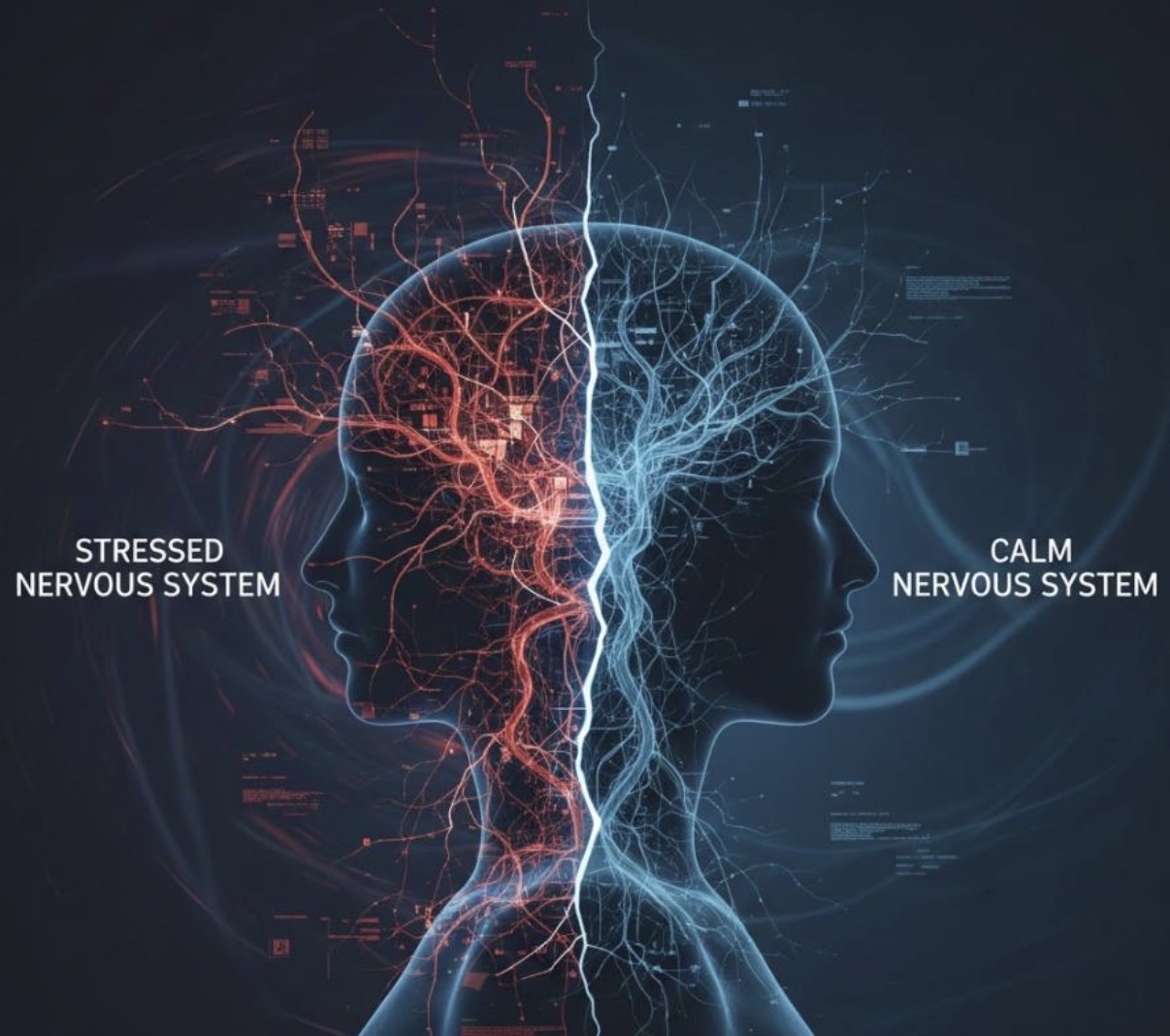
Every experience you have—every interaction, every perception, every reaction—is filtered through the state of your nervous system. When your system is regulated, you can listen, you can stay, and you can feel without being overwhelmed. You can respond instead of react.
But when your system is activated, something shifts. You become defensive, you misinterpret signals, and you lose access to empathy. You move into protection instead of connection. This is not a failure of character; it is a matter of state.
Conflict Is Not Just Psychological — It’s Biological
What we often call conflict is not just disagreement. It is two or more nervous systems that have lost the capacity to stay open at the same time. This is why arguments escalate even when both people mean well, why communication breaks down despite good intentions, and why patterns repeat across different relationships.
Because the issue is not only what is being said—it is what each system can hold in that moment.
From Individuals to the World
This dynamic does not stop at personal relationships. The same mechanisms scale outward, from individuals to relationships, from relationships to groups, and from groups to entire societies. A reactive individual creates reactive dynamics, and reactive dynamics create reactive systems.
What begins as something personal quickly becomes something collective. And suddenly, what looks like a world problem is, at its core, a capacity problem.
The Gap We Don’t Talk About
We live in a time of massive awareness. We know about trauma, we understand emotional intelligence, and we speak about presence, mindfulness, and connection more than ever before. But there is still a gap—the gap between what we understand and what we can actually embody, especially under pressure.
Biology of Peace exists within that gap, pointing not only to what we know, but to what we are able to live.
Training Peace as a Skill
If peace is biological, then it can be trained—not as an idea, but as a capacity. This means expanding your ability to stay present in discomfort, building tolerance for emotional intensity, and learning to regulate instead of suppress. It means increasing what your system can hold without collapsing or reacting.
This is where real change happens. Not when life becomes easier, but when your capacity becomes greater.
A Different Kind of Peace
Peace is not the absence of conflict. It is the ability to stay present within it. It is not passive, and it is not weak. It is a highly developed biological state that allows for deeper connection, clearer perception, and more aligned action.
Final Reflection
The question is no longer, “Do you believe in peace?” but rather, “Can your system hold it when it matters most?”
Because that is where peace begins—not in the world, but in the body.
B-Evolution
Frode